AI-Powered Defect Detection with Machine Vision in Manufacturing

Manufacturing quality control has undergone a revolutionary transformation with the emergence of AI-powered machine vision systems. These sophisticated technologies have become indispensable tools for detecting defects in production lines, offering unprecedented accuracy and efficiency that surpasses traditional manual inspection methods. As industries strive to deliver flawless products while maintaining cost-effectiveness, understanding how artificial intelligence enhances visual inspection becomes crucial for any manufacturing operation seeking competitive advantage in today’s demanding marketplace.
How AI Machine Vision Transforms Defect Detection
AI machine vision combines advanced cameras, powerful computing systems, and sophisticated algorithms to identify product defects with remarkable precision. Unlike human inspectors who experience fatigue and inconsistency, AI systems maintain constant vigilance throughout production runs, analyzing thousands of products per minute without compromising accuracy. The technology leverages deep learning models that have been trained on vast datasets of defect images, enabling them to recognize even the most subtle imperfections that might escape human notice.
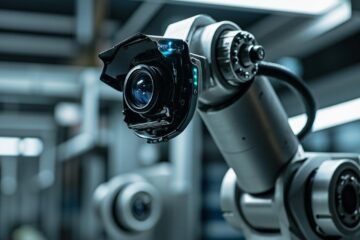
The core components of an AI machine vision system include high-resolution industrial cameras positioned strategically along the production line, lighting equipment that optimizes product visibility, edge computing devices that process images in real-time, and neural network models that classify defects. When a product passes through the inspection zone, the camera captures detailed images that are immediately analyzed by the AI system, which compares them against quality standards and identifies any deviations that indicate defects.
Key Benefits of AI-Powered Visual Inspection
Implementing AI machine vision for defect detection delivers substantial advantages that impact multiple aspects of manufacturing operations. Organizations that adopt these technologies experience significant improvements across quality metrics, operational efficiency, and cost management.
Enhanced Detection Accuracy
AI systems achieve detection rates exceeding 99.9% accuracy, dramatically reducing the number of defective products that reach customers. The technology excels at identifying micro-defects that are invisible to the naked eye, including hairline cracks, surface scratches, color inconsistencies, and dimensional variations. This level of precision helps manufacturers maintain the highest quality standards while building customer trust and loyalty.
Increased Throughput and Efficiency
Speed represents another critical advantage of AI machine vision systems. These technologies can inspect products at speeds of up to 60 products per second or faster, depending on the application and camera resolution. This capability allows manufacturers to maintain high production rates without sacrificing quality control, effectively eliminating the bottleneck that manual inspection often creates in manufacturing workflows.
Cost Reduction and ROI
While initial implementation requires investment, AI machine vision delivers substantial long-term cost savings. Organizations typically recover their investment within 12 to 24 months through reduced labor costs, decreased product recalls, lower warranty claims, and minimized waste from defective materials. The technology also enables predictive maintenance by identifying equipment issues before they cause quality problems.
Types of Defects Detected by AI Vision Systems
AI machine vision technology addresses a comprehensive range of defect categories across various manufacturing environments. Understanding these defect types helps organizations configure their systems appropriately and train models to recognize specific quality issues relevant to their products.
| Defect Category | Common Examples | Industries Affected |
|---|---|---|
| Surface Defects | Scratches, dents, pits, burrs, discoloration | Automotive, electronics, metal fabrication |
| Structural Defects | Cracks, voids, delamination, porosity | Aerospace, composites, casting |
| Dimensional Defects | Size variations, shape errors, misalignment | Precision manufacturing, medical devices |
| Functional Defects | Missing components, incorrect assembly, wiring errors | Electronics, automotive assembly, appliances |
| Cosmetic Defects | Paint imperfections, coating bubbles, stains | Automotive, consumer goods, furniture |
Industries Revolutionized by AI Vision Technology
AI machine vision for defect detection has found application across numerous manufacturing sectors, each with unique quality requirements and inspection challenges. The technology’s adaptability makes it suitable for virtually any production environment where visual quality control matters.
Semiconductor and Electronics Manufacturing
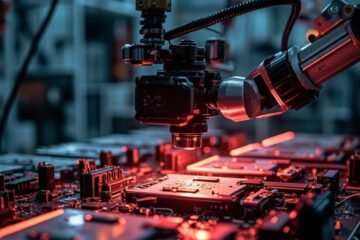
The semiconductor industry relies heavily on AI vision systems to detect microscopic defects in microchips, circuit boards, and electronic components. With feature sizes measured in nanometers, human inspection is essentially impossible, making AI-powered defect detection essential for maintaining yields and ensuring reliability. These systems inspect wafers, identify particle contamination, verify solder joint quality, and detect assembly errors that could cause field failures.
Automotive Production
Automotive manufacturers deploy AI vision throughout their production lines, from inspecting raw materials to verifying final assembly quality. The technology identifies paint defects, checks weld quality, verifies component placement, and ensures dimensional accuracy of critical parts. With safety-critical components, the ability to detect every defect without exception protects both consumers and manufacturers from potentially catastrophic failures.
Pharmaceutical and Medical Device Manufacturing
Regulatory requirements in pharmaceutical and medical device manufacturing demand rigorous quality control that AI vision systems provide consistently. These systems verify pill quality, inspect packaging integrity, check label accuracy, and ensure medical devices meet exacting specifications. The documentation capabilities of AI systems also support regulatory compliance by maintaining detailed inspection records automatically.
Implementation Best Practices
Successfully deploying AI machine vision for defect detection requires careful planning and execution. Organizations should consider several critical factors to ensure their implementation delivers expected results and provides a strong foundation for future expansion.
- Start with clear quality objectives: Define specific defects to detect and acceptable quality levels before beginning system selection.
- Invest in comprehensive training data: Collect thousands of images showing both good parts and various defect types to train accurate models.
- Ensure proper lighting setup: Work with lighting specialists to design illumination that maximizes defect visibility.
- Integrate with production workflow: Position inspection stations to minimize product handling while maximizing detection effectiveness.
- Plan for continuous improvement: Regularly update models with new defect patterns and feedback from production teams.
- Establish operator training programs: Ensure maintenance and quality personnel understand system operation and troubleshooting.
Challenges and Solutions in AI Vision Deployment
While AI machine vision offers tremendous benefits, organizations often encounter challenges during implementation. Understanding these obstacles and their solutions helps manufacturers plan more effectively and avoid common pitfalls that can derail projects.
| Challenge | Solution |
|---|---|
| Limited training data | Use data augmentation techniques and synthetic defect generation to expand datasets |
| Environmental variability | Implement adaptive lighting and environmental controls at inspection stations |