Motion Controller vs PLC: Which Platform Should You Choose?
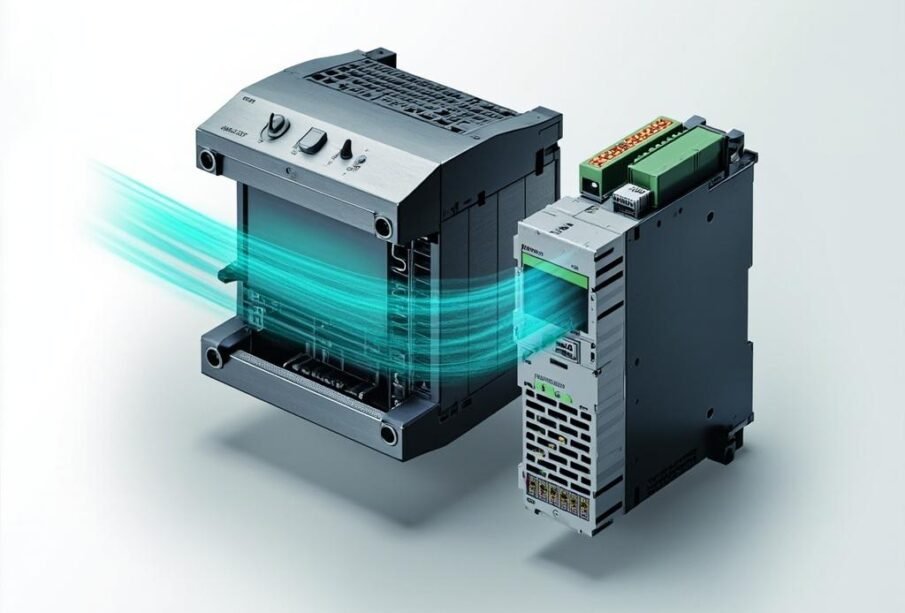
In the world of industrial automation, selecting the right control platform is one of the most critical decisions engineers and system integrators face. Two dominant contenders dominate this space: Motion Controllers and Programmable Logic Controllers (PLCs). While both serve to automate machinery and processes, they offer distinctly different capabilities, performance characteristics, and use cases. This comprehensive guide will break down the key differences between motion controllers and PLCs, helping you determine which platform best suits your specific application requirements, budget constraints, and long-term operational goals.
Understanding Programmable Logic Controllers (PLCs)
Programmable Logic Controllers have been the backbone of industrial automation since the 1960s. These ruggedized industrial computers are designed specifically for controlling manufacturing processes, machinery, and factory equipment. PLCs excel at handling discrete and process control tasks with exceptional reliability in harsh industrial environments.
Core Characteristics of PLCs
- Deterministic operation: PLCs execute programs in predictable, consistent time frames, essential for safety-critical applications
- Ruggedized design: Built to withstand extreme temperatures, vibration, dust, and electrical noise
- Modular architecture: Easy expansion through plug-in modules for I/O, communications, and specialized functions
- Extensive I/O support: Supports digital, analog, temperature, and specialized field device interfaces
- Standardized programming: Uses IEC 61131-3 languages including Ladder Diagram, Structured Text, and Function Block
Understanding Motion Controllers
Motion Controllers are specialized computing platforms optimized specifically for precision motion control applications. These devices handle complex calculations for trajectory planning, interpolation, servo loop closure, and multi-axis synchronization with nanosecond-level timing precision that general-purpose controllers cannot achieve.
Core Characteristics of Motion Controllers
- High-speed processing: Dedicated processors handle motion algorithms at microsecond or nanosecond rates
- Advanced interpolation: Supports linear, circular, helical, and sophisticated spline interpolation modes
- Multi-axis coordination: Synchronizes dozens of axes with perfect temporal alignment
- Integrated servo control: Built-in PID and advanced control loops optimized for servo and stepper motors
- trajectory generation: Complex velocity profiles including S-curve acceleration/deceleration
⚠️ Important Consideration:
Many modern automation systems employ a hybrid approach, using motion controllers for precision motion tasks while delegating general I/O handling and process control to PLCs. This distributed control architecture often provides the best of both worlds but requires careful system integration planning.
Direct Comparison: Motion Controller vs. PLC
To help you make an informed decision, here’s a detailed comparison of these two control platforms across critical parameters:
| Parameter | Motion Controller | PLC |
|---|---|---|
| Primary Application | Precision motion, robotics, CNC | Process control, discrete manufacturing |
| Cycle Time | Sub-millisecond (μs to ns) | 1-100 milliseconds typical |
| Motion Axes Support | 4-64+ coordinated axes | Limited without add-ons (2-8 typical) |
| Programming Complexity | Moderate to high | Lower learning curve |
| I/O Flexibility | Limited, motion-focused | Extensive, universal |
| Cost Range | $2,000 – $50,000+ | $500 – $15,000+ |
| Industry Standard | De facto, varied vendors | IEC 61131-3 standardized |
When to Choose a Motion Controller
A motion controller should be your platform of choice when your application demands exceptional precision, complex trajectories, or synchronized multi-axis movement. Here are the scenarios where motion controllers clearly excel:
- CNC Machining and Milling: When you need 3-5 axis interpolation with sub-micron positioning accuracy, motion controllers provide the computational power and real-time performance that PLCs simply cannot match.
- Robotics and Articulated Arms: Multi-joint coordination, inverse kinematics calculations, and path planning require dedicated motion control processors operating at extremely low latency.
- High-Speed Packaging Lines: Applications requiring precise timing between filling, sealing, and cutting operations at speeds exceeding 500 packages per minute benefit from motion controller synchronization.
- Automated Optical Inspection: When staging cameras, lasers, or sensors with nanometer-level precision, motion controllers ensure accurate positioning and synchronized triggering.
- Laser Cutting and Welding: Complex power ramping, focal point tracking, and contour following require sophisticated motion profiles that motion controllers handle natively.
- Electronics Assembly (Pick-and-Place): High-speed component placement with sub-50μm accuracy demands the trajectory planning and servo control optimization that motion controllers provide.
When to Choose a PLC
Programmable Logic Controllers remain the optimal choice for applications where reliability, flexibility, and ease of integration outweigh the need for ultra-precision motion. Consider PLCs for the following applications:
- Batch Process Control: Chemical processing, food and beverage manufacturing, and water treatment where PID loops, recipe management, and regulatory compliance are primary concerns.
- Material Handling Systems: Conveyor control, sorting systems, and warehouse automation where discrete event logic and I/O handling dominate.
- HVAC and Building Automation: Temperature control, ventilation management, and energy optimization benefit from PLC scalability and fieldbus support.
- Machine Safety Systems: Emergency stop circuits, safety light curtains, and interlock logic where deterministic response and safety certification are mandatory.
- Legacy System Upgrades: Modernizing older automation systems often favors PLCs due to compatibility with existing field wiring and communication protocols.
- Simple Sequential Control: Applications with straightforward on/off sequences, timer-based operations, and basic counter functions are ideally suited for PLCs.
Cost Considerations and ROI Analysis
When evaluating motion controller vs. PLC costs, it’s essential to look beyond initial hardware pricing and consider total cost of ownership including development time, maintenance, and scalability expenses.
| Cost Factor | Motion Controller | PLC |
|---|---|---|
| Hardware Cost | Higher (specialized components) | Lower to moderate |
| Development Time | Longer (specialized expertise) | Shorter (mature tools) |
| Maintenance Complexity | Higher (specialized skills) | Lower (wide talent pool) |
| Integration Expenses | Varies by complexity | Generally lower |