
Temperature Sensor Comparison: Thermocouple vs RTD vs Infrared
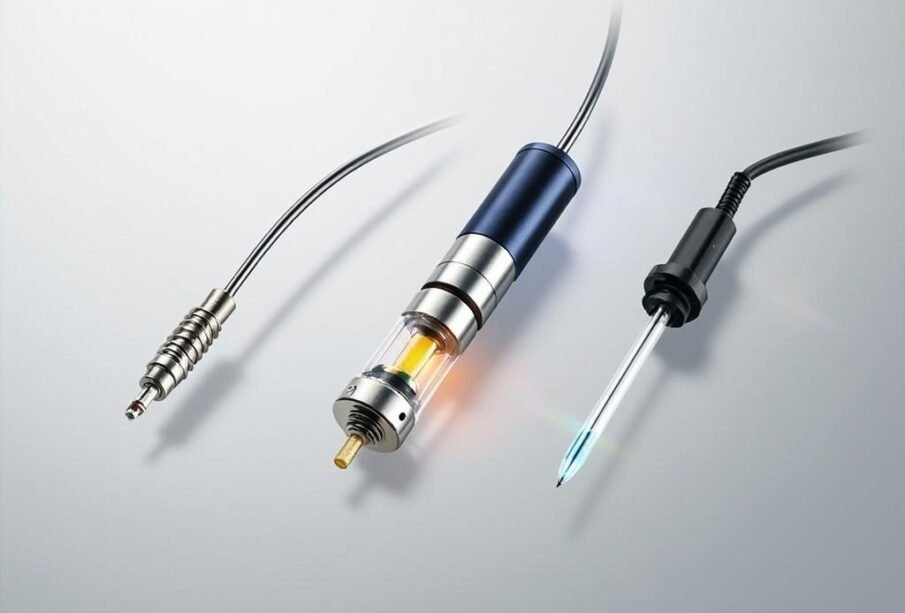
Temperature measurement is one of the most critical parameters in industrial processes, scientific research, HVAC systems, and countless other applications. Whether you’re monitoring a chemical reactor, ensuring food safety during processing, or maintaining optimal conditions in a pharmaceutical laboratory, selecting the right temperature sensor can significantly impact accuracy, reliability, and cost-effectiveness. The three most widely used temperature sensing technologies—thermocouples, Resistance Temperature Detectors (RTDs), and infrared sensors—each offer distinct advantages and face specific limitations that make them more suitable for certain environments and applications.
Understanding the fundamental differences between these sensor types is essential for engineers, technicians, and decision-makers who need to optimize their measurement systems. This comprehensive guide examines each technology in detail, providing the information necessary to make informed decisions when specifying temperature measurement solutions for your specific requirements.
## Understanding Temperature Sensor Technologies
Before diving into the specifics of each sensor type, it’s important to recognize that temperature itself cannot be measured directly. Instead, these sensors detect a physical property that changes with temperature—such as voltage, resistance, or thermal radiation—and convert that property into an readable temperature value. The choice of sensing principle directly influences the sensor’s accuracy, response time, temperature range, durability, and overall cost of ownership.
Modern industrial and commercial applications demand increasingly sophisticated temperature monitoring solutions. The global temperature sensor market continues to expand as automation increases across industries, making it crucial to understand which technology delivers optimal performance for your particular use case. From the extreme temperatures encountered in metal processing to the delicate measurements required in semiconductor manufacturing, each application presents unique challenges that different sensor technologies address in varying ways.
## Thermocouples: Versatile and Robust
### How Thermocouples Work
A thermocouple operates on the principle of the Seebeck effect, discovered in 1821 by physicist Thomas Seebeck. When two dissimilar metals are joined at one end and exposed to different temperatures, a small voltage is generated that is proportional to the temperature difference between the junction points. This voltage, known as the thermoelectric EMF (electromotive force), can be measured and converted into a temperature reading using standard reference tables.
The junction where the two dissimilar metals meet is called the measuring junction or hot junction. The other end of the wires connects to a measurement instrument and is referred to as the reference junction or cold junction. Modern thermocouple instruments automatically compensate for the reference junction temperature, ensuring accurate readings regardless of ambient conditions.
### Types and Color Codes
Thermocouples are classified by wire composition, with each type designated by a letter code that indicates its specific metal combination and temperature range. Understanding these classifications is essential for proper selection and installation.
Common Thermocouple Types:
### Advantages of Thermocouples
Thermocouples offer several compelling benefits that have made them the most widely used industrial temperature sensors. Their rugged construction allows them to withstand harsh environments, mechanical shock, and vibration that would damage more delicate instruments. The simplicity of their design—with no electronic components at the measurement point—means thermocouples can operate reliably in environments with electromagnetic interference and RF radiation.
The wide temperature range of thermocouples extends from -270°C in cryogenic applications to over 2300°C for specialized high-temperature models, covering virtually the entire range of industrial processes. Response times are typically faster than RTDs, making thermocouples suitable for dynamic processes where temperature changes occur rapidly. Additionally, thermocouples are relatively inexpensive compared to other precision temperature sensors, making them cost-effective for applications requiring multiple measurement points.
### Limitations and Considerations
Despite their advantages, thermocouples present certain challenges that must be addressed during system design. The lower accuracy of thermocouples compared to RTDs and infrared sensors—typically ±1-2°C—makes them less suitable for applications requiring precision temperature control. Drift over time, caused by metallurgical changes in the sensor materials, can affect long-term stability and requires periodic recalibration.
Thermocouples also generate very small voltage signals, making them susceptible to noise pickup in electrically noisy environments. Proper shielding and grounding practices are essential for reliable operation. The reference junction compensation requirement adds complexity to the measurement system, and any error in this compensation directly affects measurement accuracy.
## Resistance Temperature Detectors (RTDs): Precision Performance
### How RTDs Function
Resistance Temperature Detectors, commonly known as RTDs or resistance thermometers, operate on a fundamentally different principle than thermocouples. RTDs exploit the predictable change in electrical resistance of a metal conductor as its temperature varies. Nearly all RTDs use platinum as their sensing element because of platinum’s excellent stability, repeatability, and resistance to corrosion.
A standard RTD consists of a thin platinum wire wound around a ceramic or glass core, protected by a metal sheath. The resistance of the platinum element is measured precisely, typically using a four-wire connection method that eliminates the effects of lead wire resistance. The relationship between temperature and resistance for platinum RTDs follows internationally standardized curves, ensuring interchangeability between different manufacturers’ sensors.
### Standards and Specifications
The most common RTD standard is the PT100, which has a resistance of 100 ohms at 0°C. Higher precision applications may use PT1000 sensors with 1000 ohms reference resistance, which offers better sensitivity and reduced susceptibility to lead wire errors. European and International standards define the relationship between temperature and resistance using the IEC 60751 curve, while American standards follow the ASTM E1137 specification.
The temperature coefficient of resistance (TCR) describes how much the resistance changes per degree of temperature. For platinum RTDs conforming to IEC 60751, this value is 0.00385 ohms/ohm/°C. This standardized characteristic means that RTDs from different manufacturers are interchangeable, providing consistent performance regardless of the supplier.
### Advantages of RTDs
RTDs excel in applications where accuracy and stability are paramount priorities. Typical accuracy specifications range from ±0.1°C to ±0.5°C, significantly better than thermocouples. The excellent long-term stability of platinum RTDs—with drift rates typically less than 0.05°C per year—makes them ideal for applications requiring reliable measurements over extended periods without frequent recalibration.
The linear output of RTDs simplifies signal processing and reduces the complexity of instrumentation compared to thermocouples, which require complex nonlinear conversion tables. RTDs also provide better accuracy at moderate temperature ranges (-200°C to 600°C), covering the majority of industrial and laboratory applications. Their excellent repeatability ensures consistent results even when sensors are interchanged in a measurement system.
### Limitations and Considerations
The primary disadvantage of RTDs is their slower response time compared to thermocouples. The thermal mass of the sensing element, protective sheath, and internal construction creates thermal lag that can be problematic in rapidly changing temperature environments. This limitation is particularly acute in air movement applications where fast-responding sensors are essential.
RTDs are also more expensive than thermocouples, both for the sensors themselves and for the associated instrumentation. The measuring current required for RTD operation generates self-heating effects that can introduce measurement errors if not properly controlled. Additionally, RTDs are more fragile than thermocouples and can be damaged by mechanical shock or vibration, limiting their suitability for some harsh industrial environments.
## Infrared Sensors: Non-Contact Temperature Measurement
### Principles of Infrared Temperature Sensing
Infrared temperature sensors represent a fundamentally different approach to temperature measurement, detecting the thermal radiation emitted by all objects above absolute zero temperature. According to Planck’s law, all matter emits electromagnetic radiation proportional to its temperature, with the peak wavelength shifting toward shorter values as temperature increases. Infrared sensors detect this radiation and convert it to a temperature reading without physical contact with the measured object.
The infrared spectrum spans wavelengths from approximately 0.7 to 1000 micrometers, with most industrial infrared thermometers operating in the 8-14 micrometer atmospheric transmission window. The sensor’s optics focus infrared energy onto a detector, which converts the radiation into an electrical signal proportional to the target temperature. Advanced models incorporate sophisticated algorithms to compensate for atmospheric conditions, emissivity variations, and other factors affecting measurement accuracy.
### Types of Infrared Sensors
Infrared temperature measurement devices range from simple handheld spot thermometers to sophisticated thermal imaging cameras and online monitoring systems. Spot pyrometers measure temperature at a single point, with the sensor’s field of view determining the effective measurement area. The ratio pyrometer, which detects radiation in two different wavelengths, can provide accurate readings even when the target partially fills the instrument’s field of view or when smoke, dust, or steam is present.
- Type K – Chromel/Alumel (Nickel-Chromium/Nickel-Aluminum) – Most common general-purpose thermocouple
- Type J – Iron/Constantan – Good for lower temperature ranges, reducing atmospheres
- Type T – Copper/Constantan – Excellent for cryogenic and sub-zero applications
- Type E – Chromel/Constantan – High sensitivity, good for cryogenic use
- Type N – Nicrosil/Nisil – Improved stability at high temperatures compared to Type K
- Type S, R, B – Platinum/Rhodium alloys – Used for extremely high temperatures up to 1700°C
⚠ Important Consideration: Infrared sensors measure surface temperature only. They cannot determine internal temperatures of solids or liquids through line-of-sight measurement. The emissivity setting must be correctly configured to match the target material, as inaccurate emissivity values will produce erroneous temperature readings. For best results, always ensure the target area is larger than the sensor’s field of view and that atmospheric contaminants do not obstruct the optical path.
Thermal imaging cameras expand infrared measurement capabilities by creating two-dimensional temperature maps, revealing hot spots, thermal gradients, and anomalies invisible to conventional sensors. These systems are invaluable for predictive maintenance, electrical inspections, building diagnostics, and process monitoring applications where spatial temperature distribution is important.
### Advantages of Infrared Sensors
The non-contact measurement capability of infrared sensors provides unique advantages in applications where physical contact is impractical or impossible. Moving targets, hazardous materials, extremely hot surfaces, and hard-to-reach locations can all be measured safely without interrupting processes or risking sensor damage. Response times can be extremely fast—some industrial infrared sensors achieve response times measured in milliseconds—making them suitable for high-speed processes and quality control applications.
Infrared sensors can measure temperatures well beyond the range of contact sensors, with some specialized models capable of measuring from cryogenic temperatures to several thousand degrees Celsius. They consume no heat from the measurement target, eliminating the potential for measurement disturbance that affects contact sensors. For monitoring rotating machinery, electrical panels, and other applications where wiring is difficult, infrared sensors offer installation simplicity without the maintenance requirements of contact probes.
### Limitations and Considerations
Accurate infrared temperature measurement requires careful attention to several factors that can affect readings. Emissivity—the ratio of radiation emitted by a material compared to a perfect black body—must be known and correctly entered into the sensor for accurate results. Materials with low emissivity, such as polished metals, can be particularly challenging to measure accurately, often requiring special marking or coating to obtain reliable readings.
The distance-to-spot ratio must be considered when specifying infrared sensors, as the measurement area increases with distance from the target. Atmospheric conditions including smoke, steam, dust, and humidity can attenuate infrared radiation and affect measurement accuracy. Some models incorporate purging systems or protective windows to minimize these effects, but applications with significant atmospheric contamination may be better served by contact sensors.
## Comprehensive Comparison of Temperature Sensor Types
The following table summarizes the key characteristics of each sensor technology, providing a quick reference for comparison during the selection process:
| Characteristic | Thermocouple | RTD (PT100) | Infrared |
|---|---|---|---|
| Temperature Range | -270°C to 2300°C | -200°C to 600°C (typical) | -50°C to 3000°C (model dependent) |
| Accuracy | ±1°C to ±2°C (typical) | ±0.1°C to ±0.5°C (typical) | ±1°C to ±2°C (typical) |
| Response Time | Fast (0.1 to 10 seconds) | Moderate (1 to 50 seconds) | Very Fast (0.01 to 1 second) |
| Stability | Moderate drift over time | Excellent long-term stability | Good, requires periodic verification |
| Durability | Very high (rugged construction) | Moderate (fragile sensing element) | High (no contact, sealed optics) |
| Cost | Low to moderate | Moderate to high | Moderate to very high |
| Measurement Type | Contact (immersed) | Contact (immersed) | Non-contact (line-of-sight) |
| Signal Output |
Leave a reply |