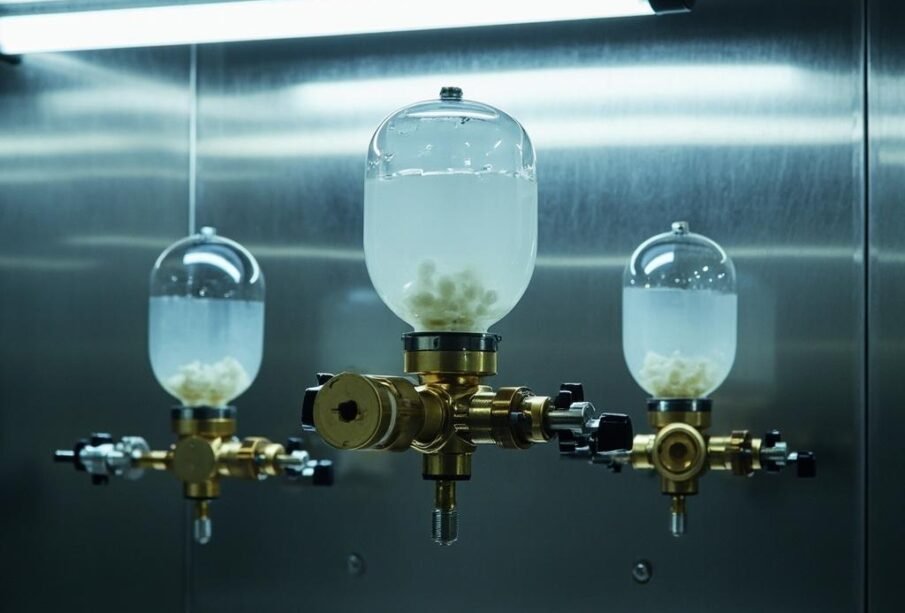
Air preparation units are essential components in pneumatic systems, serving as the foundation for clean, regulated, and properly lubricated compressed air. Whether you’re operating industrial machinery, manufacturing equipment, or automation systems, understanding these units—filters, regulators, and lubricators—is crucial for maximizing equipment performance, extending tool lifespan, and reducing maintenance costs. In this comprehensive guide, we’ll explore each component in detail, helping you make informed decisions about air preparation for your specific applications.
## What Are Air Preparation Units?
Air preparation units, commonly known as FRL units (Filter-Regulator-Lubricator), are integrated or separate devices that condition compressed air before it reaches pneumatic tools and equipment. Compressed air generated by compressors contains moisture, debris, scale, and other contaminants that can damage sensitive components and reduce operational efficiency.
Proper air preparation addresses these issues by removing contaminants, controlling pressure, and providing necessary lubrication for moving parts.
The FRL combination represents the three primary functions of air preparation: filtration to remove impurities, regulation to maintain consistent pressure, and lubrication to reduce friction and wear. These units can be purchased as individual components or as pre-assembled modular systems, offering flexibility for various industrial applications and system configurations.
## Air Filters: Removing Contaminants from Compressed Air
Air filters are the first line of defense in pneumatic systems, designed to remove solid particles, water droplets, and oil aerosols from compressed air streams. Without effective filtration, contaminants can cause valve sticking, cylinder scoring, and premature failure of pneumatic components.
### How Air Filters Work
Compressed air enters the filter housing and passes through a filtering element, typically made of sintered bronze, stainless steel mesh, or synthetic fiber.
The filtration mechanism uses a combination of inertial impaction, direct interception, and diffusion to capture particles of varying sizes. As air flows through the element, moisture condenses on surfaces and drains to the bottom of the bowl, where it can be manually or automatically evacuated.
### Types of Air Filters
There are several types of air filters available for different applications:
- General Purpose Filters: Remove solid particles down to 25-40 microns, suitable for most industrial applications
- Coalescing Filters: Capture oil aerosols and fine particles down to 0.01 microns, ideal for sensitive instrumentation
- High-Pressure Filters: Designed for systems operating above 300 PSI
- Stainless Steel Filters: Resistant to corrosion and suitable for food, pharmaceutical, or chemical processing
- Regenerative Dryers: Combine filtration with moisture removal using twin tower desiccant technology
### Filter Specifications
| Filter Type | Particle Removal | Application | Bowl Material |
|————-|——————|————-|—————|
| General Purpose | 25-40 microns | Standard industrial | Polycarbonate |
| Coalescing | 0.01-0.1 microns | Precision equipment | Metal |
| High-Pressure | 5-40 microns | Compressor discharge | Steel |
| Stainless Steel | 3-40 microns | Food/medical grade | Stainless steel |
## Pressure Regulators: Maintaining Consistent System Performance
Pressure regulators are critical components that maintain consistent downstream pressure regardless of fluctuations in supply pressure or varying air consumption demands.
A properly sized regulator ensures that pneumatic equipment operates at optimal pressure levels, improving performance while preventing damage from excessive pressure.
### Operating Principles
Regulators operate using a force-balance mechanism. When downstream pressure drops below the setpoint, the spring force pushes the valve open, allowing more air to flow. As pressure rises and exceeds the setpoint, the valve closes to restrict flow. This continuous adjustment maintains steady pressure within typical regulation ranges of ±2 to ±5 PSI.
### Regulator Types and Features
Different applications require specific regulator designs:
- Relieving Regulators: Allow excess pressure to vent when adjusting to lower settings, preventing dangerous overpressure situations
- Non-Relieving Regulators: Require external venting, used in applications where air conservation is critical
- Precision Regulators: Offer tighter regulation (±0.5 PSI) for sensitive instrumentation and testing equipment
- Back-Pressure Regulators: Maintain consistent upstream pressure in certain system configurations
- Proportional Regulators: Provide electronic or pneumatic control for variable pressure applications
### Key Selection Criteria
When selecting a pressure regulator, consider these critical factors:
- Flow Requirements: Match the regulator’s flow capacity (Cv) to your system’s maximum demand
- Pressure Range: Ensure the regulator’s operating range encompasses your required setpoint
- Port Size: Select appropriate port connections for your piping system
- Response Time: Critical for systems with rapid pressure fluctuations
- Adjustment Type: Choose between knurled knobs, tamper-resistant caps, or panel-mounted options
## Lubricators: Ensuring Smooth Pneumatic Operation
Lubricators inject controlled amounts of oil into the compressed air stream to lubricate pneumatic tools, cylinders, valves, and other moving components.
Proper lubrication significantly reduces friction, minimizes wear, prevents corrosion, and extends the service life of pneumatic equipment.
### Lubricator Operation
Most lubricators use the venturi principle to create a pressure differential that draws oil from the reservoir into the air stream. As compressed air passes through a restriction, its velocity increases while pressure decreases. This pressure difference creates a suction effect that pulls oil droplets through a small tube and into the air flow. The oil then atomizes into fine mist particles that coat internal surfaces of downstream components.
### Types of Lubricators
Different lubricator designs serve various application requirements:
Important Consideration:
Not all pneumatic applications require lubrication. Some processes, such as food packaging, medical device manufacturing, or painting operations, demand oil-free air. Always verify manufacturer specifications and industry regulations before adding lubrication to your system. Using lubricated air where it’s not permitted can contaminate products and void warranties.
| Lubricator Type |
Features |
Best Applications |
| Micro-Fog Lubricators |
Produces fine oil mist, particles 2 microns or smaller |
Distant points, multiple outlets, air motors |
| Oil-Fog Lubricators |
Creates larger droplets for nearby applications |
Close-coupled cylinders, valves, quick-acting tools |
| Mist Eliminators |
High oil output, self-contained oiling systems |
Heavy machinery, mining equipment, continuous operation |
| Automatic Drain Lubricators |
Self-filling reservoirs, no manual refilling |
Remote locations, automated systems, difficult access areas |
## Combined FRL Units: Integrated Air Preparation Solutions
Many applications benefit from combined FRL units that integrate filtration, regulation, and lubrication into a single compact assembly.
Modular FRL systems offer several advantages over individual components, including simplified installation, reduced piping, coordinated maintenance schedules, and consistent styling.
### Benefits of Combined Units
Integrated air preparation units provide streamlined functionality for pneumatic systems:
- Space Efficiency: Compact designs reduce footprint and simplify panel mounting
- Easy Installation: Single-point connection reduces piping complexity and potential leak points
- Coordinated Maintenance: Service intervals align, simplifying preventive maintenance schedules
- Visual Monitoring: Combined gauges and transparent bowls allow quick status assessment
- Cost Savings: Bundled pricing often reduces overall system cost compared to individual components
### Installation Best Practices
Proper installation of air preparation units significantly impacts system performance and longevity:
- Positioning: Install units close to the point of use for optimal conditioning effectiveness
- Orientation: Mount filters and lubricators with bowls facing down for proper drainage
- Accessibility: Ensure adequate clearance for maintenance, draining, and refilling
- Sequence: Always arrange components in the order: Filter → Regulator → Lubricator
- Direction: Observe flow arrows to ensure proper air direction through each component
## Sizing and Selection Guide
Pro Tip for Optimal Selection:
Always size air preparation components based on maximum system flow rather than average consumption. Transient demand spikes during tool actuation or cylinder extension can create pressure drops if components are undersized. A general rule: select components with a flow capacity 25-50% higher than calculated maximum demand to ensure consistent performance under all operating conditions.
### Key Sizing Parameters
| Parameter | Consideration | Typical Range |
|———–|—————|—————|
| Flow Rate | Match to system demand with safety margin | 10-500 SCFM |
| Operating Pressure | Ensure component rating exceeds system pressure | 0-150 PSI (standard), 0-300 PSI (high-pressure) |
| Port Size | Match to piping system | 1/8″ to 1″ NPT or BSP |
| Filtration Grade | Based on downstream component requirements | 5-40 microns |
| Oil Flow | Adjustable for varying viscosity requirements | 0-2 drops per minute |
### Industry-Specific Requirements
Different industries have specific air preparation requirements:
Food and Beverage Processing
Applications require FDA-compliant lubricators with food-grade oils and stainless steel filter housings. Oil-free air systems may be mandatory for direct food contact applications, eliminating the need for lubricators entirely.
Medical and Pharmaceutical
Sterile air requirements demand coalescing filters, sterile regulators, and oil-free lubrication systems. Critical applications may require point-of-use filtration and additional purification stages.
Automotive Manufacturing
High-cycle production lines require durable FRL units with quick-change features and visual service indicators. Automated drain systems minimize maintenance intervention while ensuring consistent performance.
## Maintenance Best Practices
Regular maintenance of air preparation units ensures reliable pneumatic system performance and prevents costly downtime.
Establishing preventive maintenance schedules based on operating conditions and manufacturer recommendations extends equipment life and maintains air quality.
### Filter Maintenance
Filter elements should be inspected and replaced according to the following schedule:
- Visual inspection: Monthly
- Element replacement: Every 3-6 months or when pressure drop exceeds 10 PSI
- Bowl cleaning: Quarterly or when sediment accumulation is visible
- Drain functionality: Test weekly, replace faulty drains immediately
### Regulator Maintenance
Regulators generally require less frequent maintenance but should be monitored for:
- Diaphragm Integrity: Check annually for cracks or fatigue
- Spring Condition: Inspect for corrosion or deformation
- Seat Wear: Evaluate sealing surfaces during major maintenance
- Calibration: Verify pressure settings monthly using a calibrated gauge
### Lubricator Maintenance
Proper lubricator maintenance ensures consistent oil delivery:
- Oil Level: Check daily or install automatic filling systems
- Oil Quality: Replace contaminated oil immediately; avoid mixing different oil types
- Injection Rate: Verify oil flow during operation using transparent sight domes
- Reservoir Cleaning: Clean bowls quarterly and replace worn components
### Maintenance Schedule Summary
| Component | Daily | Weekly | Monthly | Quarterly | Annually |
|———–|——-|——–|———|———–|———-|
| Filter Level/Drain | Check | — | — | Clean bowl | Replace element |
| Regulator Settings | — | Verify | Inspect | — | Calibrate |
| Lubricator Level | Check | — | Adjust rate | Clean reservoir | Replace oil |
| Overall System | — | Check operation | Visual inspection | Pressure test | Full service |
## Troubleshooting Common Issues
Understanding common air preparation problems helps diagnose system issues quickly and implement effective solutions.
### Filter Problems